
Teen Summit · An oral history

Explore the chapters ↓

How Teen Summit came back.

From BET’s original youth platform to a new generation in Central Illinois. The big ask, the work behind it, and the young people who made it a show—in the words of the people who were there.

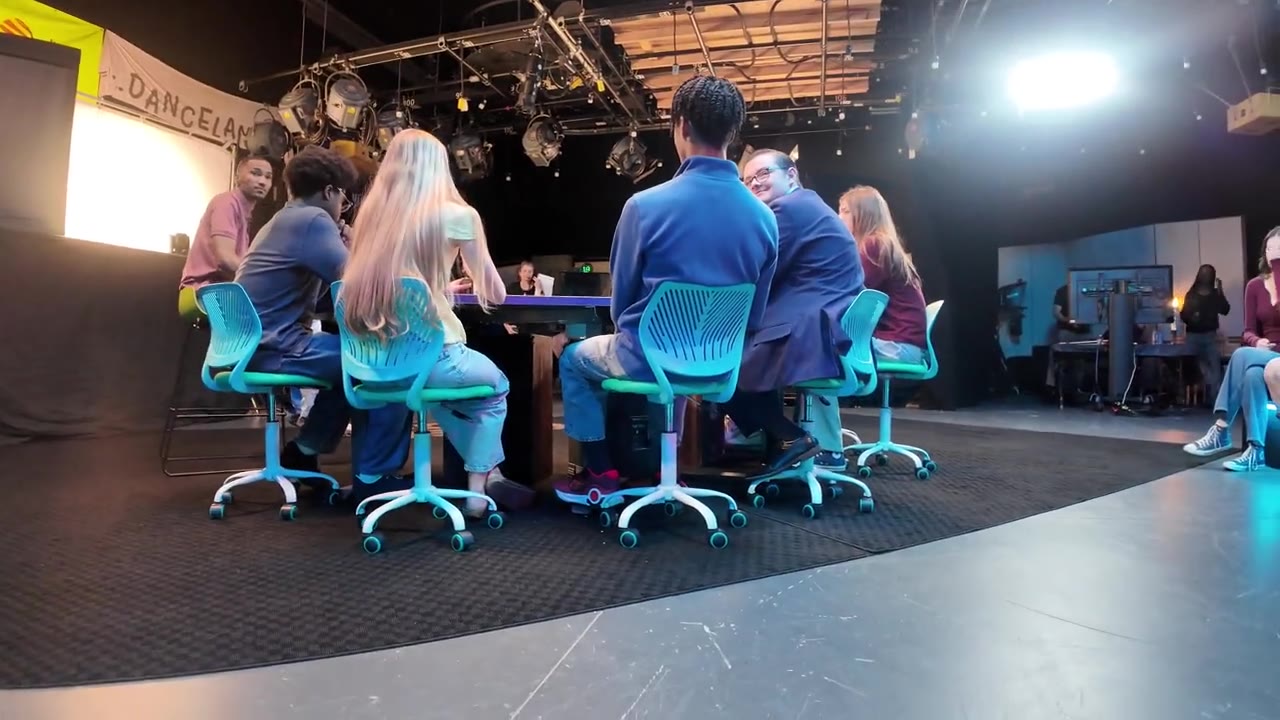
Teen Summit participants gathered together on the studio set beneath purple stage lights.
Together on set. Photograph from the supplied Teen Summit oral-history account.

· The original

1989 to 2002

An archival group photograph from the original BET Teen Summit.
Original Teen Summit, 1989–2002. Archive photos via BET (Black Entertainment Television).

BET’s Teen Summit, created by Sheila Johnson and producer Tony Regusters, put teens in a studio audience debating real issues between live R&B and hip hop performances. Hosts included Lisa Johnson, Prince Dajour and Ananda Lewis; guests included Kobe Bryant and First Lady Hillary Clinton. It won multiple NAACP Image Awards.

“A teenage Sesame Street with all the coolness of the Arsenio Hall Show.”

Dr. Malaika McKee

· The idea

A big, audacious goal

“Wouldn’t it be a big, audacious goal to ask her if we could bring Teen Summit back?”

Dr. Malaika McKee

“You think?”

Reginald Hardwick

It started with a small ask for a podcast. Then Sheila Johnson was coming to tour Illinois Soul.

The preparation

The homework

The whole station read her memoir. Reginald built a sizzle reel to prove they could do television. Dr. McKee ran the trainings.

The Illinois Public Media team gathered behind a Teen Summit sign.
The IPM team. Owner-matched original photograph from the oral-history account.

“She needed to be engaged not merely as a donor but as the builder she is.”

Dr. Malaika McKee

The answer

It happened.

Dr. McKee and Dr. Johnson smiling together.
Dr. McKee and Dr. Johnson, as identified in the supplied oral-history account.

The day came. Moss made the ask. She did not let him finish.

“Where is my CHECKBOOK?”

Dr. Sheila Johnson

Two years of building

One condition: a research arm.

A participant holding papers during a workshop at a meeting table.
The work before the show. Photograph from the supplied oral-history account.

“Teen Summit should be for all kids, not just Black ones. Teen Summit is an American show.”

Dr. Sheila Johnson

Two years of building followed. The working hypothesis: Brain Science for Civic-Mindedness. With the right teaching, young minds “can grow in powerful ways,” in Dr. McKee’s words. A hypothesis, not a proven result.

· The auditions

60 teens auditioned. 23 became Summiteers.

Three adults seated at the audition panel with microphones and notes.
At the auditions, 2026. Photograph from the supplied oral-history account.

“Kids came in… so energetic… it felt like American Idol…”

Walt B.

During auditions, Ms. Johnson watched three teenage girls open up, not just to her, but to one another. One spoke about her faith, rooted in love and acceptance, and wanted America to hear it. When they set down their microphones and left the studio, Ms. Johnson turned to us and said:

“WE HAVE A SHOW.”

Dr. Sheila Johnson

Before the cameras

Backstage Prep

Participants listening and exchanging ideas around the Backstage Prep table.
The prep table. Research, listening, and questions before the cameras rolled.

Every episode started long before the cameras rolled. After onboarding at Illinois Public Media and a training workshop on debate and media skills, the Summiteers did the research, the listening and the questions in Backstage Prep, a course on Canvas open to teens and their families.

From conversation to civic practice

FIXES at city hall.

Teen Summit participants gathered in the council chambers at city hall.
Council chambers, city hall. A mock meeting to practice civic participation.

To demonstrate FIXES, Teen Summit held a mock city council meeting with the mayor. The Summiteers acted as elected officials and discussed pressing issues like data centers, and the mayor walked them through how a typical council meeting runs.

· The tapings

FACTS · FUNK · FEELINGS · FIXES

Teen Summit participants gathered together on the studio set beneath purple stage lights.
Together on set. Photograph from the supplied Teen Summit oral-history account.

Filmed April 30, May 1 and May 3, 2026.

“I watched most of the tapings from the control room, always with a box of Kleenex nearby. I found myself beaming through tears. And, of course, there was the sheer joy of watching them finally learn to hold their microphones still.”

Dr. Molly Niesen

Beyond the labels

Who they are

They couldn’t have been more different from each other.

Labels rejected, not identities assigned. The account explicitly rejects the following stereotypes. None is assigned to any individual.

  • Rejected stereotypeThe football jock.
  • Rejected stereotypeThe dancer.
  • Rejected stereotypeThe political radical.
  • Rejected stereotypeThe sassy one.
  • Rejected stereotypeThe conservative.
  • Rejected stereotypeThe devout Christian.
  • Rejected stereotypeThe intellectual atheist.

“But as we watched, those labels quickly fell away. None of these young people could be reduced to a stereotype. They were complicated, thoughtful, sometimes contradictory, and wonderfully human.”

Dr. Molly Niesen

“Right before our eyes, they were emerging as adults and citizens of a much larger world.”
Dr. Molly Niesen

About this account

A history told by the people who built it.

Narrative and attributed quotations transcribed from the eleven owner-supplied TS2_OralHistory_v3.1 slides. Chapter signposts, photo descriptions, and explanatory notes are editorial framing. Original Teen Summit archival photography is credited to BET (Black Entertainment Television).

The supplied retrospective reports 60 teens auditioned and 23 became Summiteers, and gives filming dates of , , and . These figures and dates belong to this oral-history account; they are not the live participant directory or current production calendar, which may differ.

Return to the chapters ↑
Explore the original Legacy archive · hosts, milestones & remembrance

From BET to the Remix

The Legacy

BET's original Teen Summit gave Black teens a national platform for education, culture, and civic dialogue. Teen Summit 2.0: The Remix carries that commitment to youth intelligence into a new social media series rooted in Central Illinois.

Production frame from Teen Summit 2.0: The Remix.
Summiteers engaged in dialogue during production

A conversation carried forward.

BET's Teen Summit made room for youth conversation, culture and civic questions on a national platform. The Remix carries that respect for youth intelligence forward.

The oral-history link will be added when BET's source URL is confirmed.

Full poster placement is awaiting the Legacy or Press page decision.

Four-Act Structure

FACTS, FUNK, FEELINGS, and FIXES move each conversation from evidence through culture and personal reflection toward civic action. Summiteers examine how they think, what shapes their perspective, and how they can turn insight into action.

Teen Summit legacy oral history
The original Teen Summit created a national platform for youth voices.
Former BET Teen Summit host Ananda Lewis
Ananda Lewis helped make honest youth dialogue central to Teen Summit's legacy.
Sheila Johnson with Teen Summit 2.0 participants
The reboot carries forward the vision that launched the original Teen Summit.
Teen Summit 2.0 production in the studio
Teen Summit 2.0 brings youth voices into a professional media production environment.
Summiteers in dialogue on set
Summiteers research civic issues and bring evidence into moderated dialogue.

Historical content adapted from

BET (Black Entertainment Television)

Original BET Teen Summit

The Original Teen Summit

BET launched Teen Summit, a television series created by Black Entertainment Television Chief Operating Officer Sheila Johnson and award-winning broadcast producer Tony Regusters. Sheila Johnson envisioned something groundbreaking for young Black audiences: a show that could be simultaneously entertaining, educational, and intellectually rigorous. Regusters, a veteran news producer who had worked at CBS and Fox and served as press secretary and speechwriter for Congresswoman Maxine Waters, was the partner to bring this vision to life. The show created a lasting national platform for youth dialogue.

The Mission

Teen Summit dealt with the everyday issues teenagers faced and attempted, often successfully, to bring them into perspective in a positive, uplifting light. The weekly, one-hour, live show aimed to motivate teen viewers and their families to discuss the subjects presented. It was not just entertainment. It was a cultural conversation starter that validated youth voice at a time when young people, especially Black youth, were rarely given space to speak for themselves.

Music as the Gateway

What made Teen Summit truly unique was its strategic integration of live performances by R&B and hip-hop artists alongside serious civic discourse. Producer Tony Regusters described music as the "trojan horse" that attracted teenagers to the show on Saturday mornings at noon. Getting the coolest artists of the day made the heavy conversations palatable and culturally relevant.

Teen Summit featured landmark performances from artists including Tupac Shakur, Queen Latifah, Kriss-Kross, The Fugees, SWV, Redman, Tony! Toni! Tone!, Monica, Digable Planets, Xscape, Destiny's Child, Common, and Missy Elliott. The show also showcased early career performances from future superstars. Mya had her first television performance on Teen Summit.

Topics That Mattered

For over a decade, Teen Summit provided a platform for young people to debate, discuss, and define their perspectives on:

  • Education and college access
  • Social justice and racial equity
  • Relationships and identity
  • Music and hip-hop culture
  • Community leadership and activism

Critical Recognition and Awards

Teen Summit's impact was recognized by the industry year after year. The show won the prestigious NAACP Image Award for Outstanding Children's Program multiple times (1994, 1996, 1997, 1998, 1999, and 2001), demonstrating its significance as educational and culturally important television.

Behind the Scenes

Teen Summit's talented production teams included Byrd/George Productions and Strange Fruit Films, who understood the cultural significance of creating a platform for Black youth. The show was shot in full color, bringing vibrant energy to every episode.

Career Launchpad: The Lasting Impact

Beyond its cultural impact, Teen Summit served as a career launchpad for cast and crew. Ananda Lewis went on to a lucrative position at MTV. Producer Mercedes Funderburk started as an intern at Teen Summit and rose to become Senior Director of Talent Relations at BET.

A Living Legacy

Although the original series ended on August 31, 2002, Teen Summit's impact refused to fade. The show returned as occasional specials, including Teen Summit: Backstage Pass in 2007 and a special appearance at the BET Experience festival in 2017, proving that the concept remained culturally relevant and beloved.

The Hosts Who Made It Possible

Over its 13-year run, Teen Summit featured a roster of talented hosts and hostesses who brought their unique energy and authenticity to the show. Each brought their own style while maintaining the show's core commitment to youth empowerment and honest dialogue.

Lisa Johnson Smith

Original Host

A Temple University broadcast journalism graduate, Lisa was selected from 500 audition tapes. Producer Tony Regusters said she was "poised, old enough to be recognized as a young adult, but young enough to serve as a bridge for the kids."

Belma Johnson

Host

Belma replaced Lisa Johnson Smith and brought new energy to the show. In a groundbreaking episode on HIV, Belma got tested on live air and revealed the results, earning BET its first NAACP Image Award.

Prince Dajour

Host

A former Posse member with a powerful personal story as a teen father and former drug dealer, Prince brought authentic relatability. He later became an early host of BET's Rap City.

Ananda Lewis

Host

A San Diego native and Howard University alumna who worked with at-risk youth. Her chemistry with Prince Dajour was undeniable. Together they interviewed Kobe Bryant and First Lady Hillary Clinton.

Gabrielle Dennis

Hostess

She brought charisma and engagement to the show's dialogue. She later became known for her roles in A Black Lady Sketch Show and The Upshaws.

On Jam Fran (Fran Toliver Edwards)

Hostess

Known for bringing high energy and youthful perspective, she helped establish the show's dynamic, engaging presence.

The Posse: Youth at the Center

Beyond the main hosts, Teen Summit featured an ensemble "posse" of talented young people from the DC area who were at the heart of the show's authenticity. These teens led segments, facilitated discussions, worked behind the scenes in production, and helped design the show's format.

The show also featured correspondents like Tisha Lewis and Don Champion, plus performers like DJ Cocoa Chanelle (DJ from 1994 to 2001) who helped create the show's vibrant, dynamic atmosphere.

From Weekly to Daily: Scaling Impact

As Teen Summit grew in popularity, especially during the years when Prince Dajour and Ananda Lewis were co-hosting, the show expanded from a weekly format to a Monday through Friday daily broadcast. The show found audiences not just across the United States, but also in the Caribbean and African countries, extending its influence globally.

In Memory of Ananda Lewis

Ananda Lewis (1973 to 2025) was far more than a television host. She was a mentor, a voice for the voiceless, and a bridge between hip-hop culture and civic consciousness. Her warmth, intelligence, and authenticity made her one of the most beloved hosts in Teen Summit history.

Her Teen Summit Legacy

  • Co-hosted Teen Summit with Prince Dajour during its most influential era
  • Interviewed groundbreaking guests including Kobe Bryant and First Lady Hillary Clinton
  • Brought unmatched chemistry with co-host Prince Dajour
  • Facilitated difficult conversations with genuine warmth

Her Broader Impact

  • Transitioned to MTV after Teen Summit, becoming a cultural icon
  • Worked with at-risk youth through the Youth Leadership Institute
  • Proved that authenticity could be a television superpower
  • Left a blueprint for speaking with young people as equals

When Ananda was asked why she auditioned for Teen Summit despite initial hesitation, she reflected: "The kids in my program were like, you have to go for that audition because you always tell us that life brings you great opportunities and it's your job to step up. Now you're not going to step up? They were calling me a hypocrite."

"Teen Summit was able to provide us a space to have access to things and understandings and conversations that you didn't have access to in school. Most of that has to come from the community, and we are the community."

Ananda Lewis

Her legacy as a champion of youth voice, a cultural icon, and a genuinely good human continues to inspire new generations.

Why It Mattered

Young people have sophisticated perspectives on complex issues

Youth voice deserves national platforms

Music and civic discourse can powerfully coexist

Community-building happens through authentic conversation

Where Dialogue Meets Youth Culture

Continue the Legacy

Teen Summit 2.0: The Remix carries forward the spirit of the original, empowering young voices, celebrating culture, and creating spaces for authentic dialogue.

Join the Remix