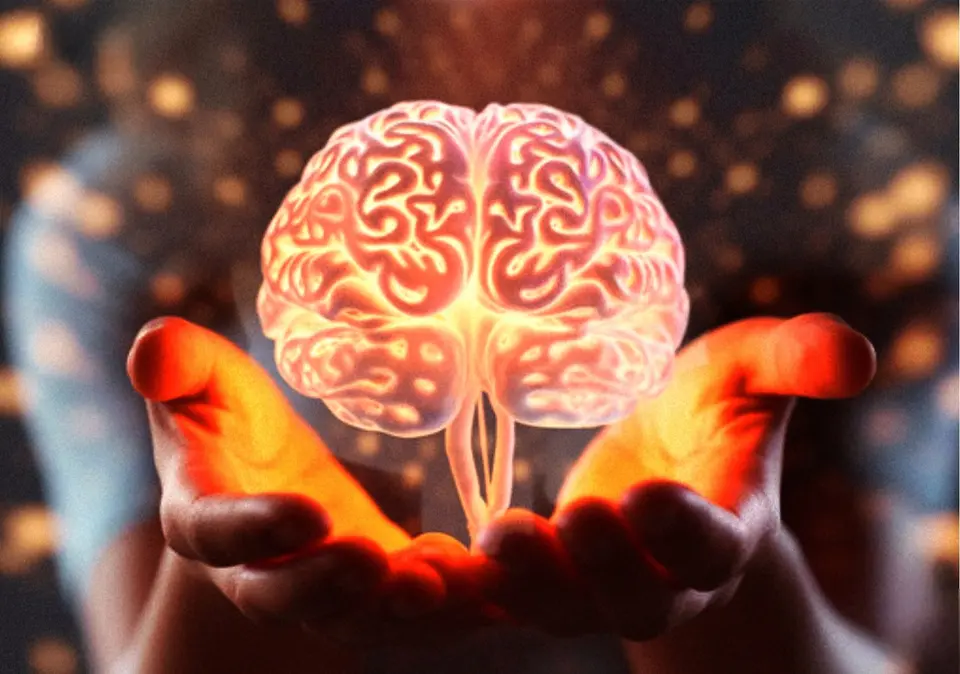
Two hands holding a glowing brain.

How the Show Works

Civic education fails not because teenagers are disengaged, but because the way it is taught does not match how the adolescent brain is built to learn.

Dr. Malaika McKee

The hypothesis.

Teen Summit 2.0 is built on a testable claim about brain development and civic reasoning.

If the questions a show asks are aligned to the default mode network, the system where adolescents make self-referential meaning, teens will engage with civic reasoning at a depth that conventional civic education does not reach. A question a teen can see themselves in fires the DMN; genuine moral ambiguity then fires the anterior cingulate cortex; that conflict recruits the temporoparietal junction for perspective taking; and a decisional act recruits the prefrontal cortex to turn the result into action. The four acts are that sequence made into a show.

  1. Structural. Civic education fails not because teens are disengaged but because it is taught in a way that does not match how the adolescent brain learns.
  2. Conflict. Managed conflict is a developmental necessity for civic growth, not a hazard to be minimized.
  3. Recruitment. Each of the four acts recruits a neurocognitive system the adolescent brain is actively building.

The four acts.

Facts, Funk, Feelings, and Fixes is a metacognitive schema Dr. Malaika McKee developed from a single hypothesis: civic education fails not because teenagers are disengaged, but because the way it is typically taught does not map onto how the adolescent brain is built to learn.

Most civic education teaches argumentation, which is conflict with the conflict taken out. Students learn to hold a position and defend it, but they never sit inside genuine disagreement long enough for it to transform into something that honors both the soft stuff of feelings and intuition and the hard stuff of facts and civic work.

Teen Summit 2.0 takes a developmental stance: managed conflict is not a hazard to be minimized but a condition teenage minds need in order to grow civically. Adolescence is when the brain is most sensitive to social friction and most capable of being reorganized by it. If we want to teach young citizens to do the work of democracy, conflict must be structured rather than avoided. Emotionally live dialog matters as much as the clinical form of traditional debate.

The show is built in four acts, the Quad-4 structure. Each act is hypothesized to recruit a system in the adolescent brain that is still developing toward civic performance.

  1. Facts
  2. Funk
  3. Feelings
  4. Fixes

FACTS

brain system: default mode network

Facts asks where a claim came from, who cleared it, and who got paid. It draws on the default mode network, where narrative and self-referential meaning are made. A curriculum undergirds this act, assembling articles from all sides of the episode's political issue so that participants can speak to the facts that most resonate with their lived experience. This framing lets different political positions emerge authentically.

FUNK

brain system: temporoparietal junction

Funk asks how a claim traveled through the arts. Drawing on hip hop pedagogy, it asks what got sampled, flipped, or spit to make an argument. Music from multiple genres is preassigned for listening and curated by a musicologist who is also the show's DJ. The adolescent mind runs these samples through the temporoparietal junction, the seat of perspective taking and social attunement, both of which surge in adolescence.

FEELINGS

brain system: anterior cingulate cortex

Feelings asks what the show's questions want from you. It treats emotion as evidence of democratic work rather than noise to be banished, engaging the anterior cingulate cortex as it monitors the conflict between what you believe, what you have just been shown, and what you hear from others. Hosts moderate this act by asking open questions that let conflicting feelings sit side by side without judgment.

FIXES

brain system: prefrontal cortex

Fixes gives democratic thinking democratic accountability. It closes the loop from thought and dialog into action through prefrontal executive function, the last system to mature and the one civic education most often asks teenagers to use before they have built it. Summiteers do civic work in two ways. The first is Academic Civic NILs (Name, Image, and Likeness), a concept Dr. McKee developed with Walt Bowman, through which each Summiteer builds a civic brand around the issues closest to their identity. The second is direct work with the show's mayoral partners, including a mock city council meeting.

A note for researchers.

The mapping of the four acts onto the default mode network, temporoparietal junction, anterior cingulate cortex, and prefrontal cortex is a heuristic correspondence, not a claim that each act activates one region. Brain regions participate in far more than the functions described here. What Teen Summit 2.0 offers is an invitation to treat adolescent brain development and metacognition as a viable arc for designing educational programming that teens experience as authentic. Teens are finely attuned to coolness and raw realness; if they sense performative, sermonic, or moralistic talk, they will not watch. The show has to meet them where they are developmentally.

We are looking to partner with neuroscientists to test this hypothesis. See the Research page for details.

Civic NeuroSci