Teen Summit 2.0: The Remix / The four acts
A show in four acts.
A civic question moves through evidence, culture, reflection and action. Each act gives Summiteers a different way into the conversation.
Facts. Funk. Feelings. Fixes.
Learning to notice how we think.
Dr. Malaika McKee developed Facts, Funk, Feelings and Fixes as a metacognitive framework: a way for young people to examine their own thinking as they work through a civic question.
The program starts from a hypothesis: civic education should do more than teach students to defend a position. It should structure genuine disagreement so facts, feelings, intuition and civic responsibility can be considered together.
The four acts move that inquiry through evidence, music, reflection and action.

Act I · The Dialogue
Facts I
Where did the claim come from?
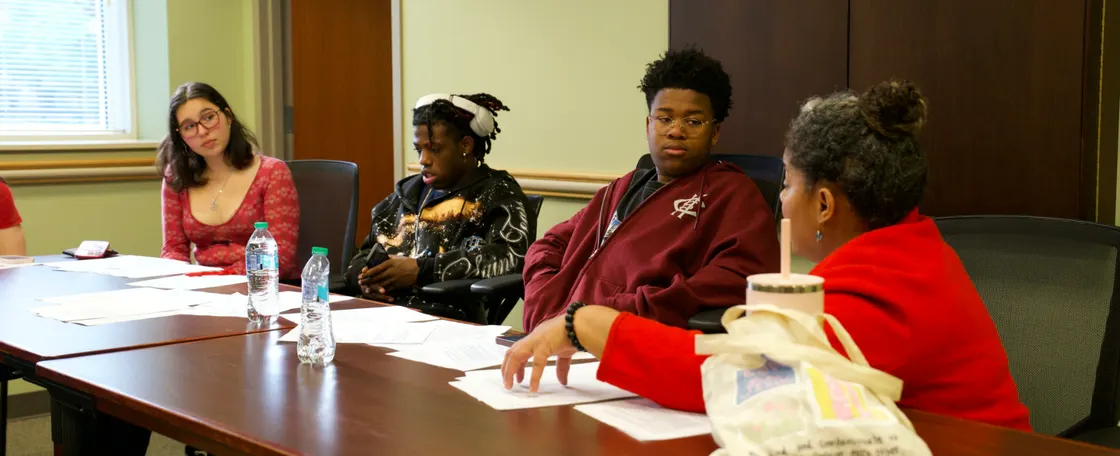
Facts begins with a civic issue and the evidence behind it. Summiteers read research dossiers that bring different political positions into the same conversation. They ask where a claim came from, who cleared it, and who got paid.
The curriculum draws on articles from across the political positions surrounding an episode's issue. Summiteers connect evidence with lived experience, check sources, and explain why a particular fact matters. The aim is to let different positions emerge authentically, not to assign everyone the same conclusion.
Flip the Script asks Summiteers to examine more than one side of a question. They practice making an argument, listening to a challenge, and reconsidering what they thought they knew.
Preparing for the dialogue
The published program describes expert-curated research dossiers, dialogue coaching and studio performance as connected parts of preparation. A dossier is a starting point for inquiry, not a script for what a Summiteer must believe.
Questions to bring to the work.
Use these reading prompts to explore the act alongside program materials.
- Find the original source of a claim rather than relying only on a repost or headline.
- Compare how two positions use evidence. Are they answering the same question?
- Explain the strongest version of a different position before offering a response.
Carry it into the next conversation.
After a discussion, return to the evidence. Which claim became clearer, which needs checking, and what would help the conversation move forward?
People and partners
Act II · Musicology
Funk II
How did the claim travel?
Funk follows a civic question through music and the arts. What got sampled, what got flipped, and which lyrics carried an argument? Music becomes another source to read closely.
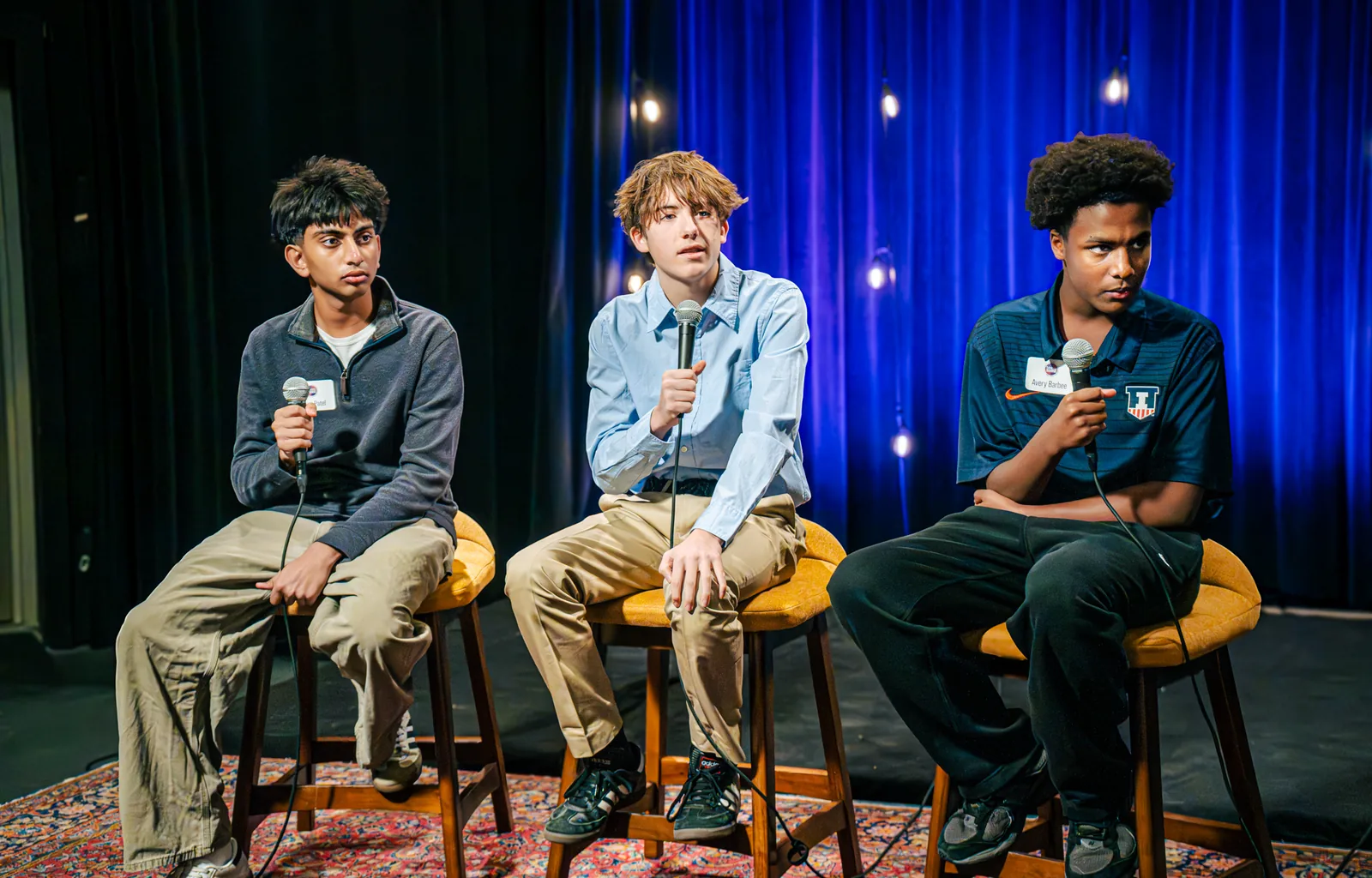
Preassigned listening spans multiple genres and is curated by the show's musicologist and DJ. Grounded in hip-hop pedagogy, this artistic inquiry invites Summiteers to consider perspective, interpretation and the choices artists make.
DJ Silkee is the Funk Musicologist. She curates the listening that accompanies the episodes and brings music into the show's civic conversation.
Listening as a form of inquiry
The published program describes playlists connected to each episode's topic. Illinois Public Media's announcement explains that hip-hop informs the pedagogy while making room for other musical and cultural influences. A track can open a question about history, identity or public life.
Questions to bring to the work.
Use these reading prompts to explore the act alongside program materials.
- Listen for the point of view: who is speaking, and to whom?
- Consider the historical and social context behind a lyric or musical choice.
- Ask what changes when an idea is sampled, remixed or heard by a different audience.
Carry it into the next conversation.
Music offers a cultural perspective, not a substitute for a research source. Bring what you hear back into conversation with the issue and evidence.
People and partners
Act III · Hosted dialogue, confessionals and podcast
Feelings III
What does the question want from you?
Feelings makes room for the personal stakes of a public question. Summiteers consider what they believe, what they have heard, and how an issue lands in their own lives.
Hosts use open questions to let conflicting feelings sit side by side without judgment. Summiteers can examine the tension between what they believe, what they have just been shown and what they hear from others. Confessionals and podcast conversations extend that reflection.
The aim is to name a response, listen to someone else's experience, and reflect before answering. Emotion belongs in civic conversation alongside evidence.
Different spaces for reflection
The published program distinguishes a solo confessional from a group podcast conversation. One gives a Summiteer room to reflect without an audience in the conversation; the other lets participants process ideas together. Hosted dialogue brings those perspectives into a shared exchange.
Questions to bring to the work.
Use these reading prompts to explore the act alongside program materials.
- Name what affected you before deciding how to answer it.
- Distinguish your experience from an assumption about someone else's experience.
- Consider whether a question, rather than a rebuttal, would help you understand.
Carry it into the next conversation.
A reflection can be meaningful without becoming public. Personal choice and the required releases remain part of any decision to share youth work.
People and partners
Act IV · Civic action
Fixes IV
From dialogue to civic action.
Fixes turns the conversation toward action. After examining evidence, culture, and personal experience, Summiteers ask how they can take part in the civic life of their communities.
Dr. McKee developed Academic Civic NIL (Name, Image and Likeness) with Mr. Walt Bowman as one path into this work. Summiteers build a civic identity and portfolio around issues close to their lives.
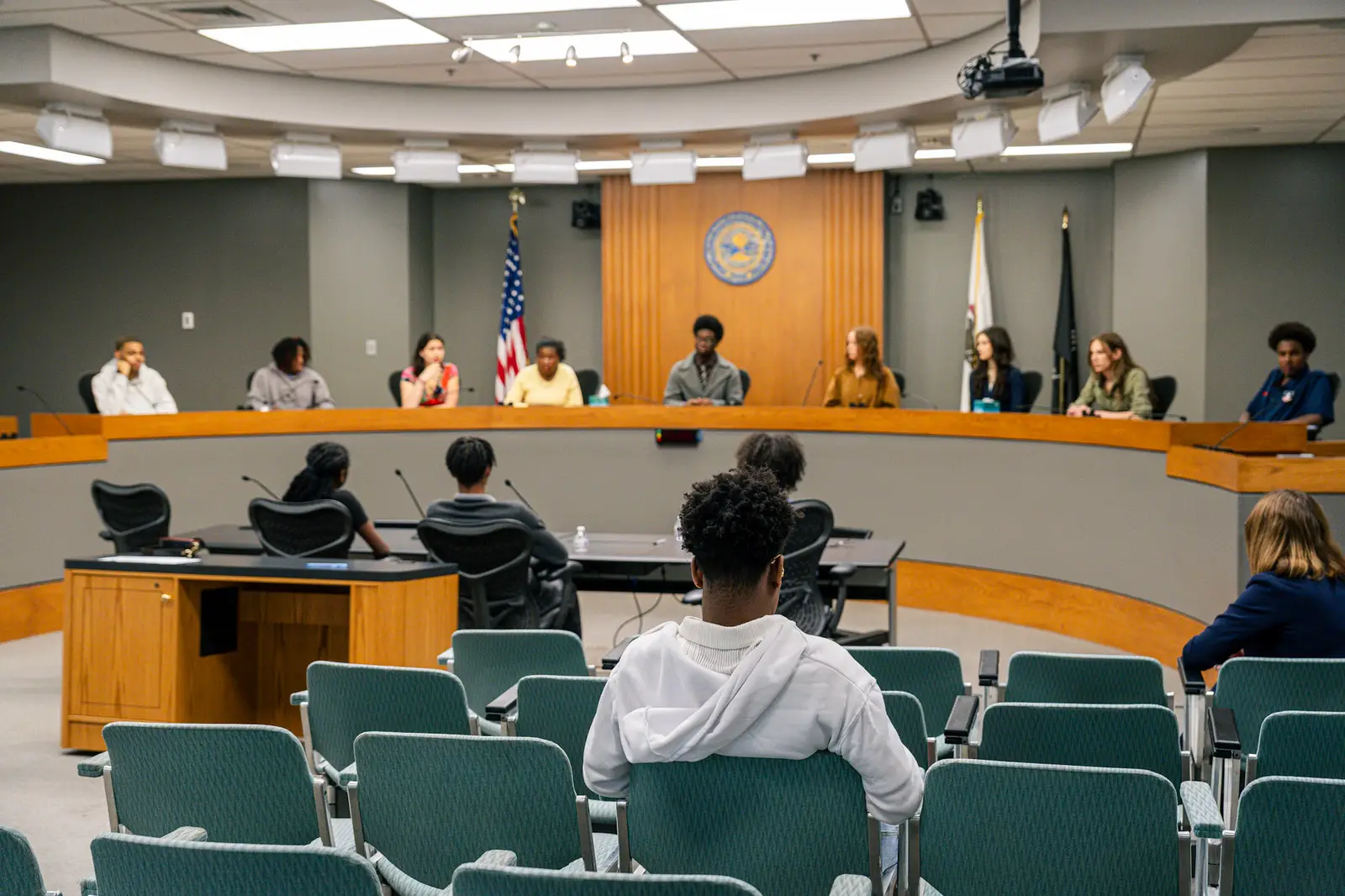
A second path connects Summiteers with mayoral partners through civic activities such as a mock city council meeting. These opportunities connect democratic thinking with public responsibility; they are not a claim that a particular activity has already taken place.
The act closes the loop between learning and doing. It asks for a considered next step, not a promise that one conversation can solve every problem.
Connecting learning with a next step
The Academic Civic NIL program connects personal voice with responsible media practice and portfolio development. Its published learning areas include storytelling, visual communication and interview skills. Civic action begins by considering what a contribution is for and who it serves.
Questions to bring to the work.
Use these reading prompts to explore the act alongside program materials.
- Identify the community or audience affected by the issue.
- Choose a realistic next step informed by what you learned, rather than a promise to solve everything.
- Consider what consent, collaboration or additional evidence is needed before sharing the work.
Carry it into the next conversation.
A portfolio can document growth in research, communication and civic judgment. It is not a guarantee of income, college credit or a particular career outcome.
People and partners
Before the cameras roll
The practice behind the conversation.
Explore Flip the Script and the preparation that helps Summiteers engage with a perspective other than their own.